People imagine a holiday home first as a feeling. Salt on the windows. A long table at Christmas. Boots in a row by the back door. Then the project starts, and the feeling has to survive a hundred small decisions about where the kettle sits, what the floor takes, which sofa keeps its line after a thousand sandy guests.
What follows is a working list of the calls we make at Studio AROS when we shape a holiday home interior. They are the calls that decide whether a property holds its rate or quietly drifts. Most are unglamorous. All of them compound.
Design for the fortieth changeover, not the first
Listing photographs matter. They sell the place. But the schemes that earn their keep across a decade are the ones built for a Friday night in February, when guests arrive late, the dog has been sick in the car, and someone has left half a flapjack on the back seat.
Plans drawn around real arrivals look different to plans drawn around hero shots. Wider hallways. A coat hook at child height. A landing window that catches afternoon light in the kitchen.
A holiday home should feel like the best version of where it is.
Materials that wear in, not out
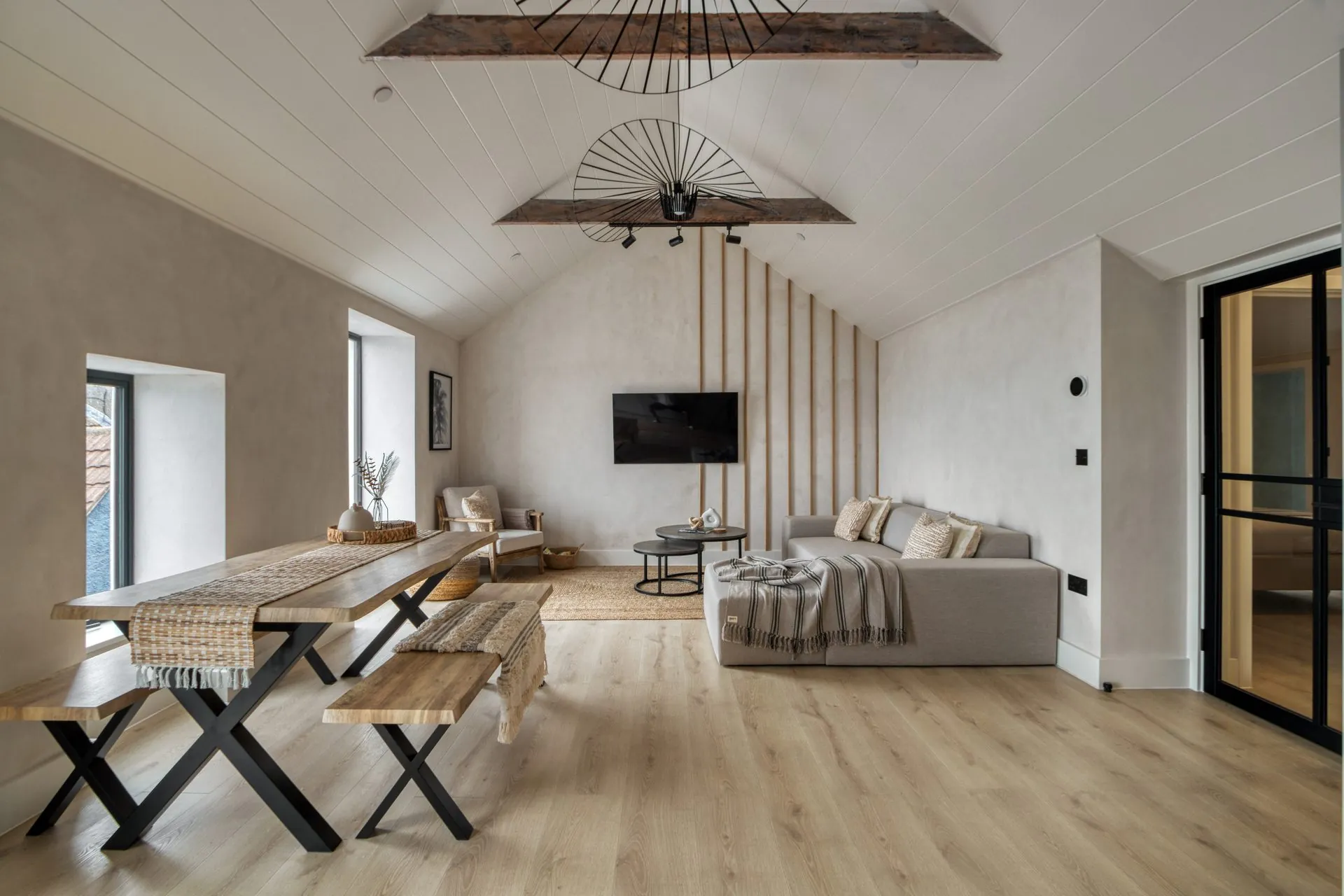
The single biggest distinction between a holiday home that ages well and one that ages badly is the spec. Synthetics that look brilliant in week one tend to look tired by year three. Honest natural materials take wear and turn it into character.
The shortlist for most holiday home interior design projects:
- Oiled oak floors, never lacquered. Scratches happen. They don’t matter. A weekend re’s the room.
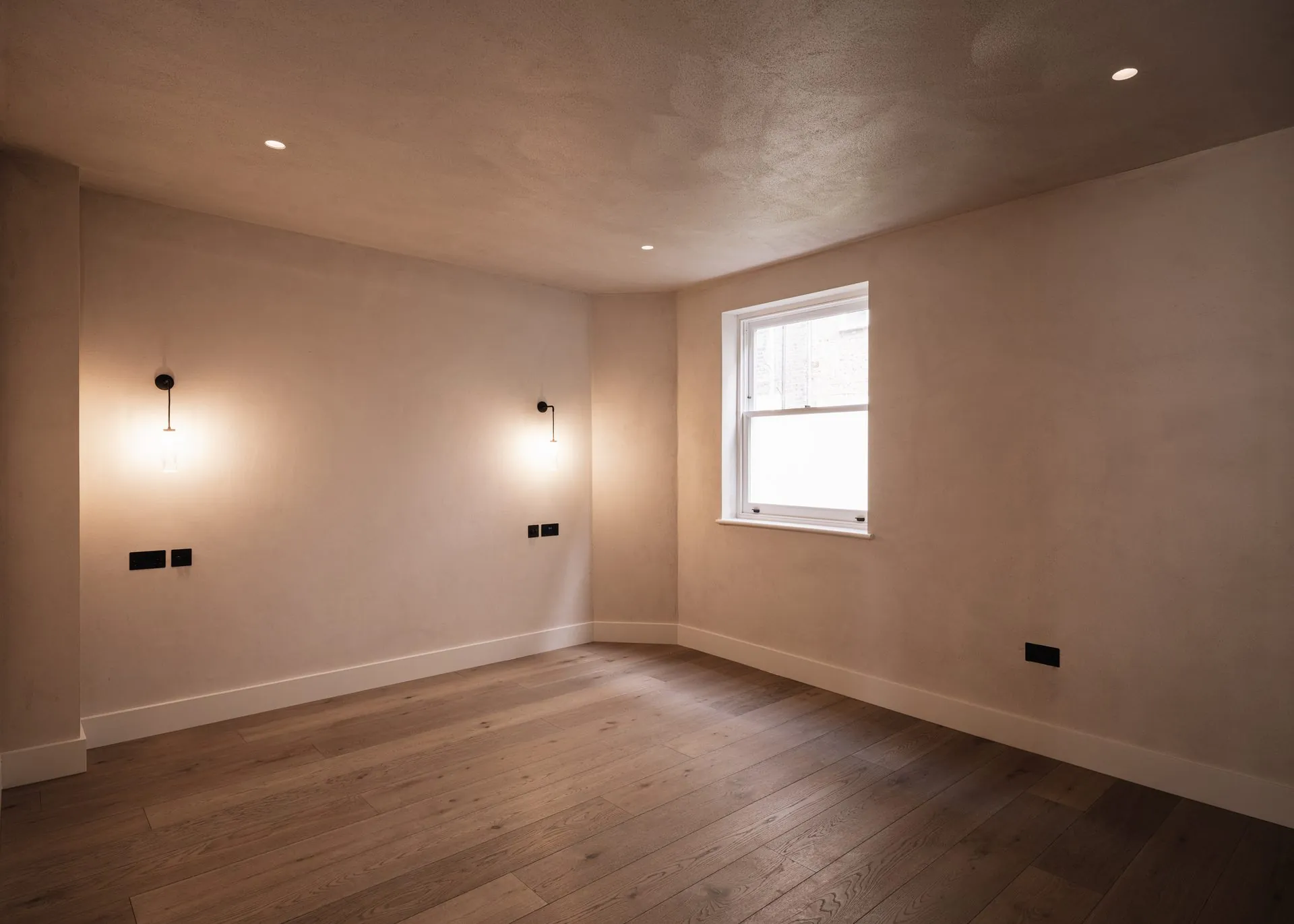
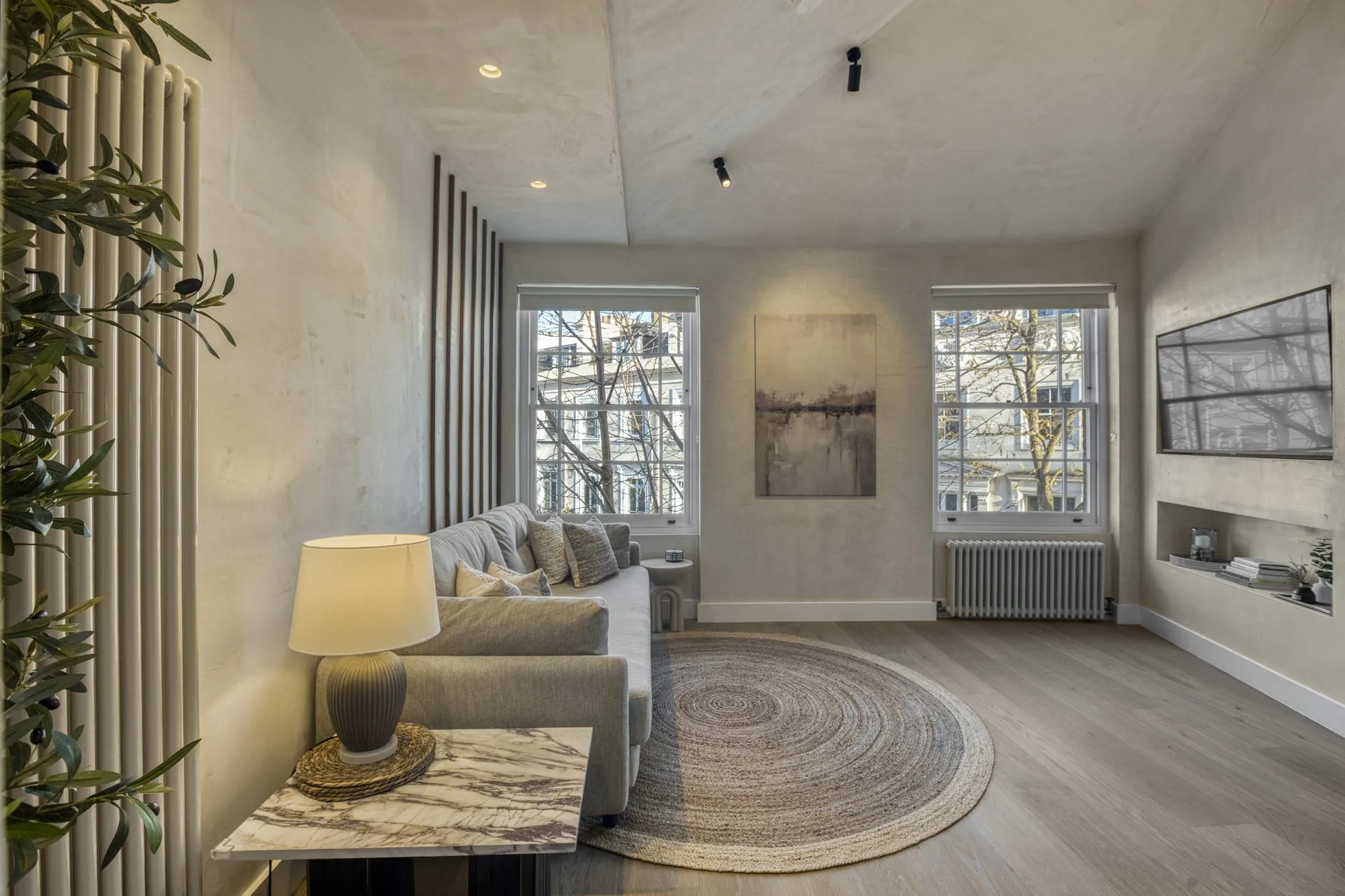
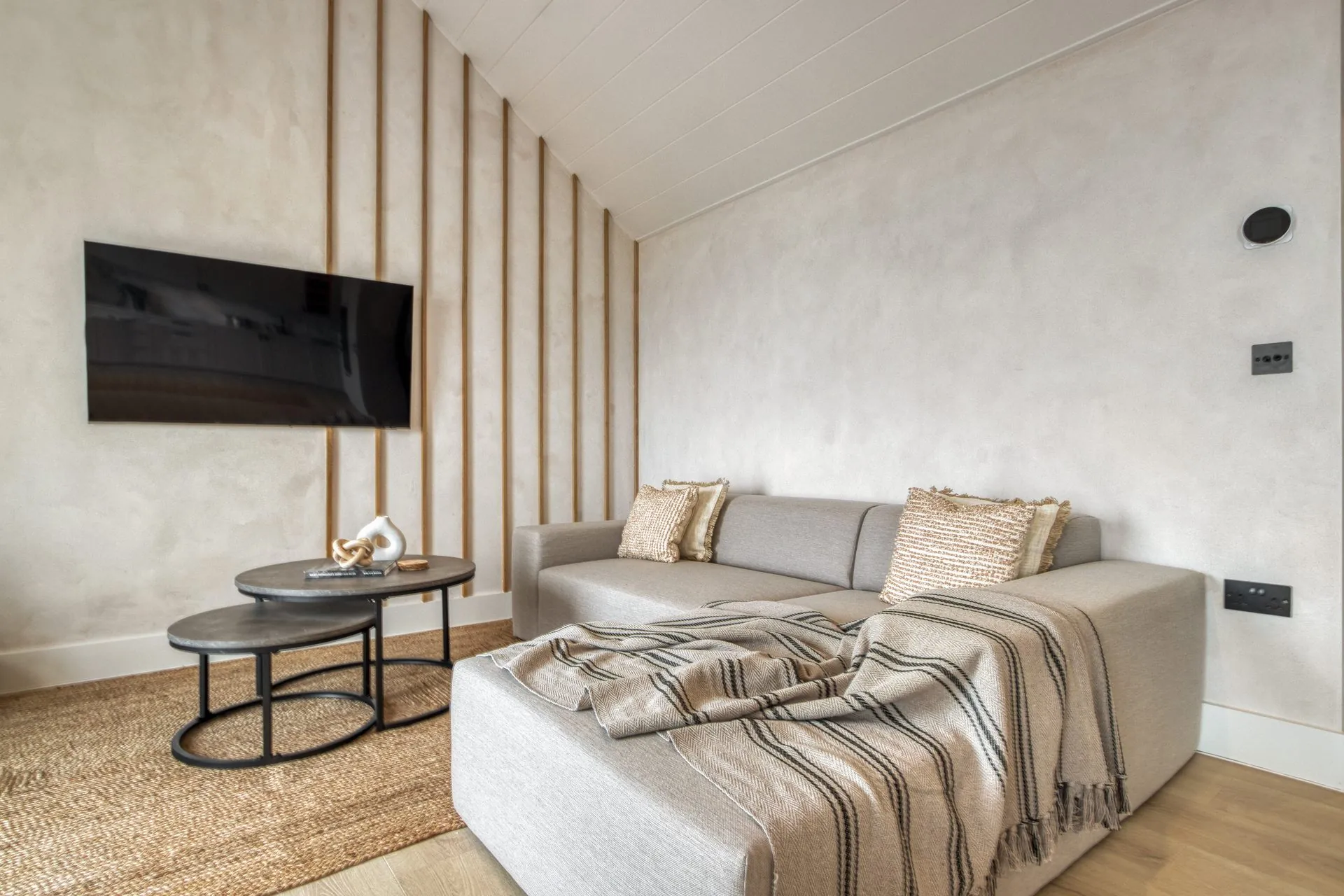
- Limewashed plaster walls on coastal jobs. Soft, breathable, forgiving of damp, and improved by the way coastal light moves across them.
- Linen and wool upholstery on the pieces guests actually use. Performance fabrics where they earn their place, rarely on the sofa you’d most want to sit in.
- Solid timber joinery with replaceable handles. Five years on, the carcass is fine. The ironmongery is what looks tired, and ironmongery is easy to swap.
The boot room test
Most holiday homes don’t fail in the kitchen. They fail at the back door. A generous boot room is the difference between a house that absorbs a wet weekend and a house that gets dragged through one.
Properly thought through means a tap for sandy hands, a bench long enough for two pairs of boots, hooks at adult and child heights, a drying rail somewhere with airflow, and a tile floor that doesn’t mind being wet. None of it is exciting. All of it is what guests remember when their lurcher comes home from the beach.
Lighting two rooms in the same room
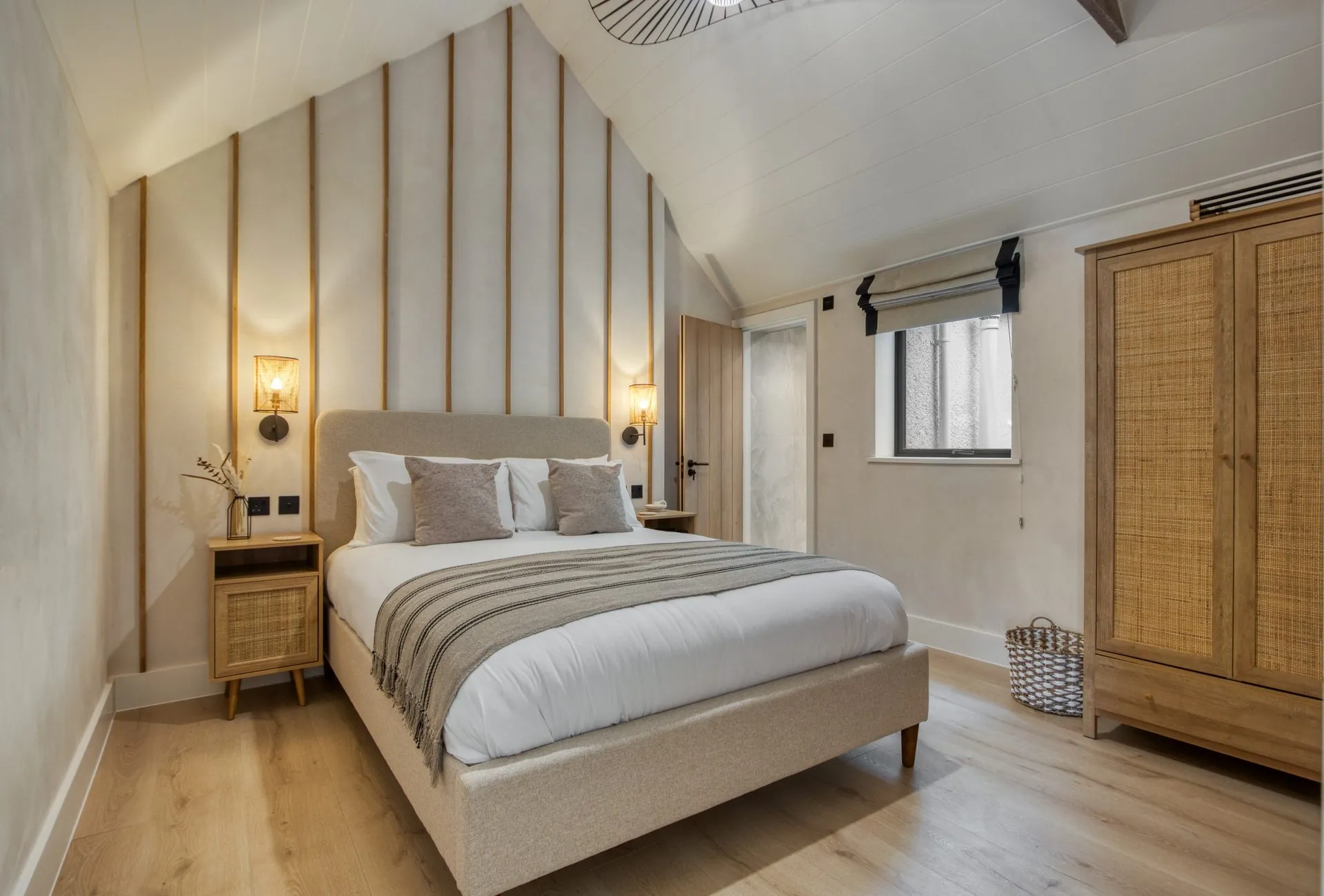
Holiday homes are photographed in daylight and lived in at dusk. The lighting has to serve both. We layer four sources in any room people will spend an evening in. A low glow on table lamps. A task layer over the kitchen and reading nooks. A wash for the architecture. One feature piece that does the work of a piece of jewellery.
The mistake we see most often is lighting designed for a daylight render, then left short of warmth at night. A great holiday home reads beautifully on Saturday morning and feels welcoming on Sunday at nine.
Storage where housekeepers actually need it
This is the hidden lever. Cleaners, housekeepers and changeover crews are the people who decide, week after week, whether a property looks the way it’s meant to. If linen lives on the wrong floor, if cleaning storage is awkward, if there’s nowhere obvious for guests to leave a wet towel, the house slowly degrades.
We talk to whoever runs the property as part of the brief. It saves a lot of joinery, and a lot of frustration.
One palette, lightly turned toward the place
A coastal property does not need to look coastal. Anchors and rope are usually a sign of a brief that was anxious about specifics. One warm, considered, organic palette will do, lightly turned toward the place. A rough Welsh stone in the fire surround. A piece of driftwood the owner brought home. Oak the colour of the cliff path. The setting earns one or two specific gestures, not a costume.
If you’re curious how this looks in built form, it’s the thinking behind our Gower coastal project. A former B&B turned into three holiday lets, designed to feel of the place rather than dressed for it.
The numbers behind the design
Holiday home interior design isn’t only an aesthetic exercise. The decisions feed into nightly rate, occupancy, length of stay, repeat bookings and review scores. Clients have told us a good boot room shifted their average review by half a star. A correctly placed reading nook brought them a different demographic of guest.
If you’re running a property as a let, design at this level pays back. If you’re using it privately, the same decisions just mean the house is less stressful to walk into on a Friday night.
Where to start
If the purchase itself is still ahead of you, it is worth reading our note on the legal groundwork behind a holiday home first. That side of things is quieter than the design, and far easier handled early than late.
Otherwise, honestly, with the property, the brief and a long site visit. We work in two ways. Full design, where architecture, interiors and planning all sit under one roof, suits a coastal conversion or new build. Interiors led work suits a property that already has its bones. Either way the first conversation is free. Get in touch and tell us a little about the place.